

What Makes a Good Online Memorial
What makes a good online memorial is not defined by content alone, but by how that content is structured and experienced. Some memorials feel clear, focused, and cohesive even when they contain similar elements to others.
These examples illustrate structural characteristics rather than representing a recommendation.
A defined entry point
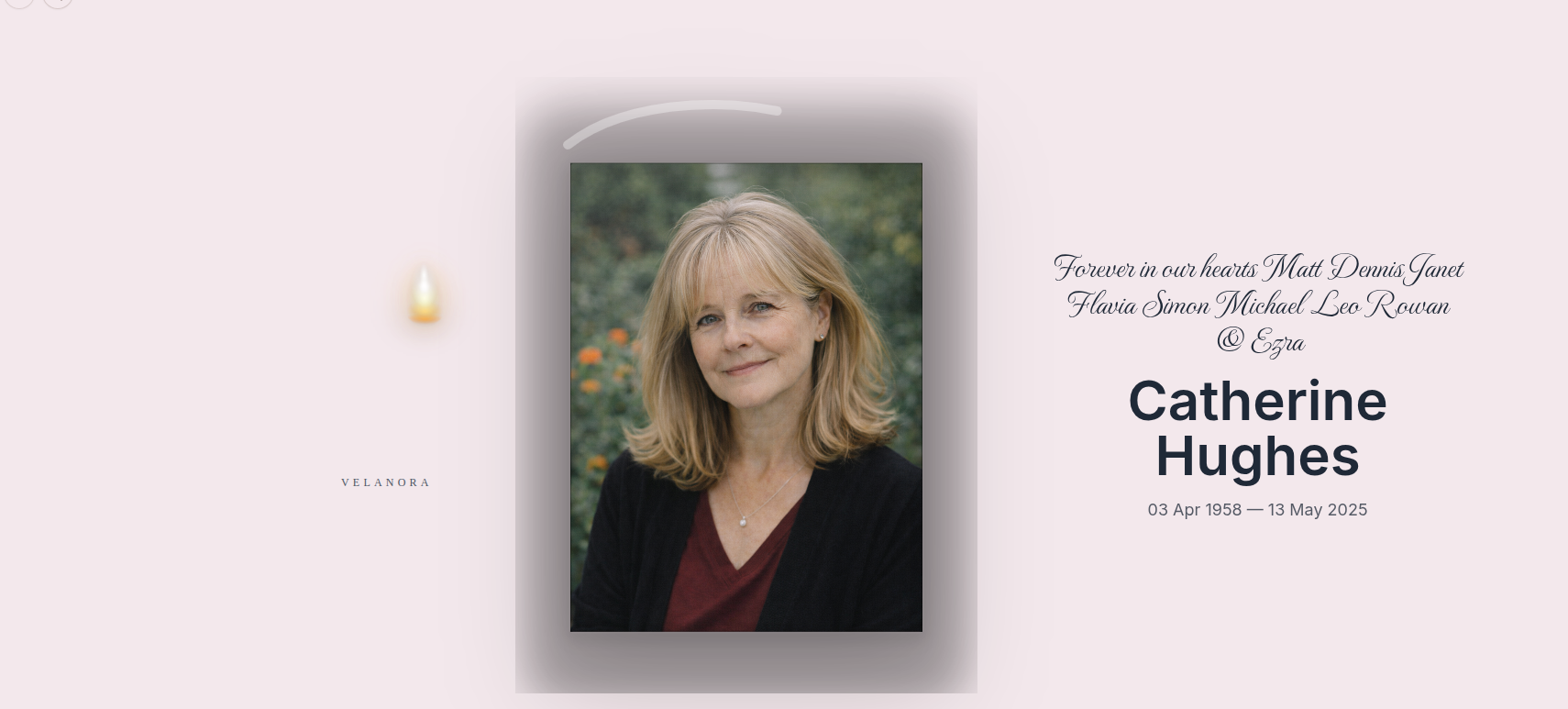
The memorial begins with a clear opening moment. A primary image, a name, and minimal text establish identity immediately. There is no ambiguity about where to look or how to begin. The visitor is oriented without effort.
Clarity over volume
Understanding what makes a good online memorial helps explain why some experiences feel more meaningful than others.
The amount of visible content is limited. Rather than presenting everything at once, the memorial shows only what is necessary at each moment. This reduces competition for attention and creates a sense of focus.
Structured progression
Content is experienced in a defined order. Images and text appear in sequence rather than as a collection of separate elements. This creates continuity and allows meaning to develop gradually. The memorial feels guided rather than open-ended.
Consistent pacing
The rhythm of the experience is stable. Each element is given space, and transitions are predictable. There are no sudden interruptions or competing sections. The visitor moves forward at a steady pace.
Visual emphasis
Images are the primary focus. They are presented clearly, without distraction. Text supports the images rather than competing with them. Attention is directed naturally.
Music as part of the structure
Music forms part of the experience rather than sitting alongside it. It is present from the beginning and continues consistently. It does not compete with images or text, but moves with them.
Minimal structural noise
Unnecessary elements are absent. There are no excessive controls, competing sections, or overlapping features. The structure remains simple, allowing the content to be experienced without interference.
Alignment with behaviour
The memorial reflects how visitors actually engage. It does not rely on interaction or contribution. It allows for passive viewing, short visits, and repeated access without requiring effort.
Adaptability over time
The memorial allows change without losing structure. New content can be added, but it does not disrupt the overall experience. The structure remains stable even as the memorial evolves. This preserves clarity while allowing growth.
A coherent whole
All elements contribute to a single experience. There is no separation between sections or competing pathways. The memorial feels unified rather than fragmented.
Structure over features
The effectiveness of the memorial does not depend on the number of features it includes. It depends on how those elements are arranged. Structure defines the experience more than functionality.
Subtle integration of messages
Messages are present, but do not dominate the experience. They are integrated quietly within the structure rather than competing for attention. This allows contribution without disrupting flow or clarity.
A quiet conclusion
The memorial reaches a natural end. The experience resolves without abrupt interruption or indefinite continuation. This provides a sense of completion.
A memorial feels clear and meaningful when its structure defines how content is experienced, while remaining stable as it evolves over time.